Taking action on autism
Appropriate interventions and programmes can be of great help in supporting people with autism and their families.
AUTISM, also referred to as autism spectrum disorder, constitutes a diverse group of conditions related to development of the brain.
About one in 100 children has autism. Characteristics of this disorder may be detected in early childhood, but it is often not diagnosed until much later. Autism is often seen as an invisible illness – people cannot “see” the disability, they just see the peculiar behaviours. They see the obsessive interests, social awkwardness, tics and hand flapping. Because of this, children with autism are known to be more vulnerable than others to being alienated.
Health and social issues
People with autism have the same health problems as the general population.
However, they may, in addition, have specific healthcare needs related to autism or other co-occurring conditions.
They may be more vulnerable to developing chronic non-communicable diseases due to behavioural risk factors such as physical inactivity and poor dietary preferences.
They are also at greater risk of violence, injury and abuse.
Therefore, they require accessible health service for general healthcare needs like the rest of the population, but with emphasis on promotive and preventive services. Mental health professionals are only too aware that people with autism often have overlapping conditions, including epilepsy, depression, anxiety, insomnia and attention deficit hyperactivity disorder (ADHD).
The level of intellectual functioning among people with autism also varies widely. Children with autism often end up spending more time in inclusive settings, where they lack the skills necessary to interact and engage with their non-identified peers.
They struggle to initiate a conversation or respond appropriately because they hardly see and interact with their peers outside the school environment. These social issues can transfer to adulthood, making it difficult for these individuals to retain a job, or to develop and maintain adult relationships.
But this need not always be the case.
Community and national action
We know the abilities and needs of people with autism vary and can evolve over time.
While some with severe disabilities require lifelong care and support, others can live independently.
Well thought-out psychosocial interventions can improve communication and social skills, with a positive impact on the well-being and quality of life of people with autism and their carers.
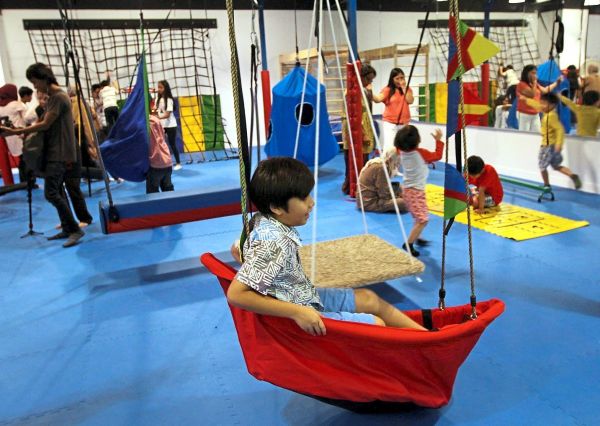
I serendipitously learned of one such “out of the box” initiative in the Klang Valley – a purpose-built sensory gym not only supporting children with special needs, but also for all children with different abilities to play, learn and develop together.
This way, children with special needs do not have to be apart from their more neurotypical siblings, cousins or friends.
Clearly, care for people with autism needs to be accompanied by actions at community and socie-tal levels for greater accessibility, inclusivity and support.
In this regard, the Health Minister Khairy Jamaluddin’s announcement (Khairy: National registry of autism cases to be set up, The Star, July 16) that the ministry is in the midst of forming a Nation-al Autism Council, which is targeted to be up and running by the end of the year, was wholeheartedly welcomed by all relevant stakeholders.
The plan to include non-governmental organisations (NGOs), parents and patient advocates in the council is the right way to walk the talk, living the saying “Nothing about us, without us”.
“The formation of the council and all concerned parties can band together and form a network that provides better information-sharing among the various agencies and governing bodies in Malaysia.
“It will provide support for parents and make sure we support those with autism from the time they are children till they are adults,” said Khairy. This is a key point as the demands on families providing care and support can be significant.
Societal attitudes and the level of support provided by state and national authorities are important factors in determining the quality of life of people with autism.
The World Health Organization’s (WHO’s) Comprehensive Mental Health Action Plan 2013–2030 and the World Health Assembly resolution on global actions on epilepsy and other neurological disorders calls on countries to address the current significant gaps in early detection, care, treatment and rehabilitation for mental and neurodevelopmental conditions, which include autism.
The assembly also urges countries to address the social, economic, educational and inclusion needs of people living with mental and neurological disorders, as well as that of their families, and to improve surveillance and relevant research.
Similarly, our Health Minister said: “We also want a National Clinical Autism Registry to collect data on cases, so that we can have holistic information that can help the Health Ministry to do better intervention work.”
The potential collaboration between the National Autism Council and the proposed National Centre of Excellence for Mental Health will be able to craft evidence-based intervention to better support and serve individuals on the autism spectrum.
Involve the parents
I would also suggest that parents be invited to play both formal and informal roles in the research process.
We must learn to listen to parents if we want to understand the aspirations of the community involved in autism.
A mental health professional may be an expert in the biophysio- logy of autism, but most parents are world experts in their own children.
I spoke to Nori Abdullah, Khairy’s wife and an advocate for people with autism, and this is what she had to say: “As a parent of three boys, with my second being autistic, I hope that the national council can be a body with the authority and capacity to bring together the multiple stakeholders from both public and private sectors, as well as the community, to address wide-ranging issues and concerns affecting autistic individuals and their families.
“A combination of efforts in collaboration, particularly between government ministries and agencies, must help drive and oversee efforts for appropriate accommodation and support needed today, from cradle to grave.”
Parents of children with autism have one common dream for their children: for them to live in a world where they are not only accepted, but also understood, welcomed and appreciated.
So, how can we build a kinder world where differences are celebrated?
Nori believes that: “When change becomes necessary at the societal level, and can involve public policy, numbers and strong voices do make a difference.
“It is also important to advocate for those who may not be able to advocate for themselves.”
Whether it’s learning more about those living with autism among us or offering support to someone we know who is living with autism, there are many things we can do as individuals, including sailing in unchartered waters, to build a more inclusive world.
I am reminded of what another parent of a child with autism said about their child: “I wouldn’t change you for the world, but I would change the world for you.”
Datuk Dr Andrew mohanraj is a consultant psychiatrist and the Malaysian Mental Health Associa-tion president. For more information, email starhealth@thestar.com.my. The information provided is for educational and communication purposes only, and it should not be construed as personal medical advice. The Star does not give any warranty on accuracy, completeness, functionality, usefulness or other assurances as to the content appearing in this column. The Star disclaims all responsibility for any losses, damage to property or personal injury suffered directly or indirectly from reliance on such information.
 Dr. Andrew Mohanraj